How Old Is the B-52 Bomber? Deadly California Crash Renews Debate Over America's Ageing Military Fleet
US Air Force confirms fatalities as B-52 bomber crashes after takeoff
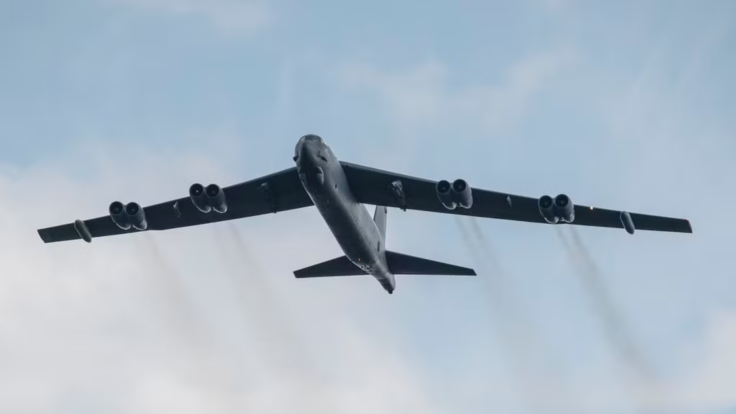
Eight people have been killed after a B-52 bomber crashed during a test mission shortly after takeoff at Edwards Air Force Base in California, military officials have confirmed. The aircraft burst into flames in the Mojave Desert, sending thick black smoke into the sky and prompting an immediate emergency response at one of the United States' most sensitive flight test facilities. Authorities have described the crash as 'not survivable' as investigations begin into what caused the fatal incident.
B-52 Bomber Crash
The accident occurred at around 11:20 a.m. local time during what officials said was a routine test flight. The base, located roughly 100 miles north of Los Angeles, was temporarily closed to incoming aircraft while emergency crews secured the area and accounted for personnel. Officials confirmed that eight people were on board the B-52 bomber, including a mix of military personnel, civilian government staff and defence contractors.
Families of those killed are being notified, while investigators work to establish the sequence of events that led to the crash. The US Air Force has said that determining the cause could take several months, given the complexity of the aircraft and the conditions surrounding the test mission.
Edwards Air Force Base Crash Shuts Down Airfield
Edwards Air Force Base, a major US military testing and development site in California's Mojave Desert, suspended flight operations following the crash. Video shared from the area showed heavy black smoke rising close to the airfield shortly after the incident. All inbound aircraft were diverted as emergency teams responded on the ground.
@onebadshark Video of Air Force B-52 bomber shortly after takeoff at Edwards Air Force Base in California
♬ original sound - onebadshark
The base covers approximately 480 square miles and is used for testing advanced aircraft, weapons systems and aviation technology. It has played a central role in American aviation history, including early supersonic flight testing and NASA space shuttle landings.
What Happened to the B-52 Bomber?
The aircraft involved was a B-52 Stratofortress bomber, one of the longest-serving military aircraft in the world. Officials confirmed it went down shortly after takeoff during a test mission. The bomber, which normally operates with a crew of around five, had eight people on board at the time of the crash.
The aircraft reportedly caught fire and was destroyed on impact. Authorities have not yet released the identities of those killed, citing ongoing notification procedures for next of kin. The Air Force has also not confirmed whether the aircraft experienced mechanical failure, human error or another issue before the crash.
The presence of both military personnel and civilian contractors on board reflects the B-52's continued role in testing and evaluation programmes linked to ongoing upgrades of the ageing fleet.
How Old Is the B-52 Bomber?
The B-52 bomber first entered service in the 1950s during the Cold War era and has remained a cornerstone of the United States' strategic air power for more than seven decades. Originally designed as a long-range nuclear-capable bomber, it has since been adapted for conventional warfare and modern precision strike roles.
Despite its age, the aircraft continues to be a central part of the US Air Force fleet due to extensive upgrades to avionics, engines and weapons systems. It has been used in conflicts including the Gulf War and more recent military operations in the Middle East.
The longevity of the B-52 bomber has often been highlighted as unusual in modern military aviation, with the aircraft expected to remain in service well into the coming decades.
Investigation Underway Into Cause of Crash
The US Air Force has launched a formal investigation into the cause of the crash. Early statements from officials suggest that it is too soon to determine what led to the incident, and all possibilities remain under review.
Investigators will examine aircraft systems, maintenance records, flight data and environmental conditions as part of the inquiry. A full report is expected to take months, given the complexity of analysing a decades-old aircraft still in active service.
© Copyright IBTimes 2026. All rights reserved.
- Recommended For You