

Trump Was Assessed by 22 Specialists for His Checkup and the White House Refuses to Say Why He Needed So Many
White House confirms unprecedented number of specialists but offers no detailed explanation.
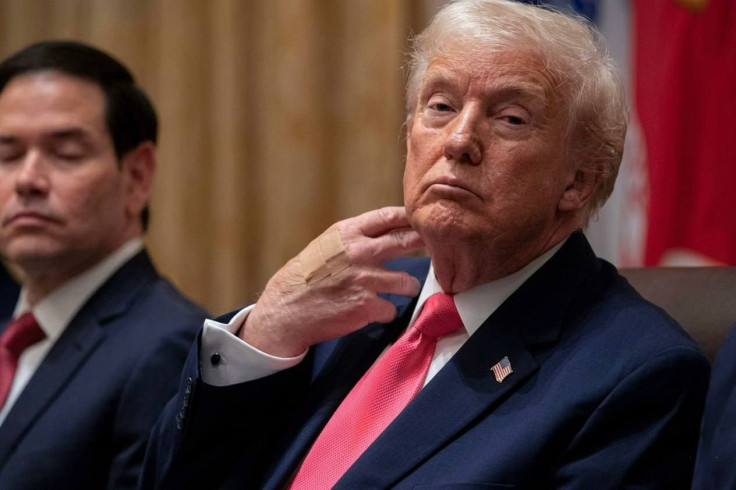
Donald Trump's most recent physical at Walter Reed National Military Medical Centre involved 22 medical specialists, a figure the White House has confirmed but refuses to explain.
A review of Trump's medical records, released by the White House and reported by the Washington Post on 10 June 2026, found that 22 specialists assessed the 79-year-old president during his three-hour visit to Walter Reed on 27 May, breaking the previous record for any presidential medical examination.
That number is nearly double the 14 specialists who examined Trump at his most recent visit, and almost double the 12 who assessed George W. Bush during his first presidential checkup in 2001. The White House has declined to identify which medical disciplines those specialists represent or to explain why so many were involved.
A Record-Breaking Number With No Explanation Offered
Presidential medical examinations have historically involved a cluster of specialists, but the figure of 22 is, by any measure, without precedent in the modern record. According to the Washington Post's analysis of publicly available presidential health disclosures, George H.W. Bush was examined by five specialists at his first presidential checkup in 1989. His son, George W. Bush, saw 12. Trump himself saw 11 specialists during a 2019 checkup and 14 at a visit last year.
The Washington Post reported that some of the 22 counted as specialists by the White House were generalist physicians, a detail the White House confirmed when pressed. Even so, the overall count stands at a level that independent physicians say warrants scrutiny. 'It is an extraordinary number,' Jonathan Reiner, the longtime cardiologist who treated former Vice President Dick Cheney and a regular medical commentator on CNN, told the Post. 'What specialities do they represent? Why so many?'
The White House responded to that question with a prepared statement rather than an itemised answer. 'The involvement of multiple specialists reflects a comprehensive, multidisciplinary evaluation consistent with best practices for executive-level medical care,' the statement read. 'We have nothing to hide.'
What the Barbabella Memo Does and Does Not Reveal
The three-page medical report, authored by White House physician Captain Sean P. Barbabella and released late on the evening of 30 May 2026, declared Trump to be in 'excellent health' and 'fully fit' to discharge his presidential duties. The memo confirmed that Trump underwent a CT scan, advanced cardiac imaging, including an echocardiogram and an AI-enhanced ECG analysis, along with cancer screenings and a range of preventive assessments. That AI-enhanced ECG analysis, Barbabella stated, estimated Trump's cardiac age to be about 14 years younger than his actual age.
Trump weighed in at 238 pounds (108 kilograms), an increase of 14 pounds from his April 2025 physical. His physicians recommended increased physical activity and weight management, though the memo concluded that his 'cognitive and physical performance are excellent.' His blood pressure was recorded at 105/71 mmHg and his temperature at 98.7 degrees Fahrenheit.
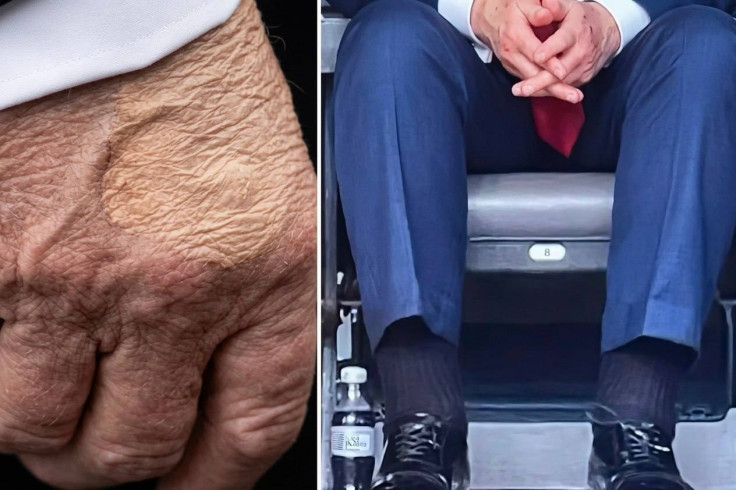
Two visible symptoms that have drawn sustained public attention were addressed but not fully explained. The bruising on Trump's hands, described by Barbabella as 'consistent with minor soft tissue irritation related to frequent handshaking,' was attributed to aspirin therapy. Trump had been taking 325 milligrams of aspirin daily, roughly four times the standard preventive dose of 81 milligrams.
The memo noted that the coagulation profile was normal and recommended switching to low-dose aspirin. The leg swelling attributed to chronic venous insufficiency, a condition first disclosed by the White House in the summer of 2025, showed 'slight improvement from last year,' Barbabella wrote, though slight lower-leg swelling was still noted during the examination.
Experts Argue the Report Raises More Questions Than It Settles
Independent physicians and bioethicists have pointed to the gap between the reassuring language in the Barbabella memo and the volume of clinical data that was conducted but not made public. The report cited results from a coronary CT angiogram, an echocardiogram and an AI-enhanced ECG, but omitted the specific numerical readings from those tests, which physicians said they would normally expect to see in any transparent clinical disclosure.
S. Jay Olshansky of the University of Illinois-Chicago, who has studied the health of past presidents, told STAT News that the public deserves to see more than White House medical summaries that 'may be subject to editorial discretion.' He called for full, unredacted records to be released, stating: 'Nothing should be hidden.'
Sara Rosenthal, a bioethicist at the University of Kentucky who has studied presidential health disclosure, told STAT News and multiple outlets that there is no legal requirement for any president to release health records. She has proposed creating an independent medical body to review and report on the health of whoever holds the office. 'I think we can expect very little disclosure about the true health status of any president unless they're in perfect health,' Rosenthal said.
In the absence of any legal obligation to disclose, and with the White House continuing to withhold the identities of 22 specialists and the detailed readings from a battery of advanced cardiac tests, the gap between what the president's doctor has said and what independent physicians say they need to see widens.
© Copyright IBTimes 2026. All rights reserved.