Trump Health Crisis at G7: Doctors Slam 'Too Good to Be True' Medical Report as Breathless POTUS Struggles to Balance
An official claim of 'excellent health' is running headlong into the reality of how the president looks and sounds on the world stage.

President Donald Trump's health is facing fresh scrutiny after he appeared breathless, hoarse and unsteady at the G7 summit in France, just weeks after a White House medical report declared the 80‑year‑old president in 'excellent health'. His laboured delivery at a press conference and visible difficulty sitting down have reignited questions over how closely the official assessment matches what millions saw on screen.
For context, the latest questions over Trump's condition followed a string of awkward on-camera moments at this year's G7. On Tuesday, cameras caught the US president gripping Indian Prime Minister Narendra Modi's arm while trying to take his place for a group photograph, with Modi appearing to guide him up a single step that other leaders managed with ease. By Wednesday, the focus had shifted from balance to breathing.
Breathless Trump At G7 Alarms Viewers
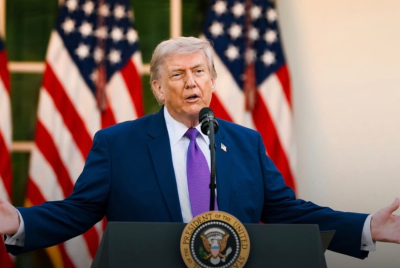
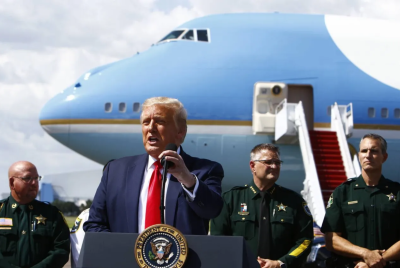
The president took the podium on Wednesday afternoon to brief reporters on the G7 discussions in France, addressing the war in Iran and turbulence in the stock market. But much of the online reaction homed in not on his words, but on how he delivered them.
Listeners on X, formerly Twitter, said Trump sounded unlike his usual bombastic self. One user wrote that his voice was 'different' and that he was 'breathless like someone with heart and or lung problems'. Another remarked that 'even with the bronze plaster on his face, the president looks exceedingly unwell'.
Trump, 80, trails off and struggles to complete a full sentence:
— FactPost (@factpostnews) June 17, 2026
Oil is dropping... like it has never... dropped before. At levels. When, in... in numbers. pic.twitter.com/1n4zybc19s
A third post, widely shared, read: 'TRUMP WHEEZES G7 VICTORY SPEECH. Donald Trump will attempt to deny. Every statement he makes is a lie... his voice has a rasp... he'll wheeze and he'll gasp.' The tone may be partisan, but the audio clips circulating alongside it did little to calm nerves.
Later the same day, during a joint appearance with Egyptian President Abdel Fattah el‑Sisi, Trump was filmed very slowly lowering himself into a chair, appearing to struggle to keep his balance as he sat down. Journalist Aaron Rupar flagged the moment to his followers, writing on X that 'Trump looks terrible today and very slowly lowers himself into a chair.'
Trump looks terrible today and very slowly lowers himself into a chair pic.twitter.com/UiohLEZpYB
— Aaron Rupar (@atrupar) June 17, 2026
None of these incidents amounts to a formal medical finding. In politics, however, perception can build quickly. In Trump's case, it feeds into a long‑running public debate about how healthy the oldest president in US history really is.
G7 Images Clash With White House Report
The scrutiny intensified after the White House released a glowing health assessment that many medical professionals questioned. Earlier this year, Trump made his third visit to Walter Reed Medical Center in 13 months, then dropped out of sight for more than a week.
When the administration eventually published its summary, the memo from White House physician Dr Sean Barbabella was unequivocal. The president, he wrote, was in 'excellent health', with 'strong cardiac, pulmonary, neurological, and overall physical function'.
On paper, Trump looked remarkably robust for an 80‑year‑old. Texas vascular surgeon William Shutze told The Wall Street Journal that 'that report is almost too good to be true for somebody of his age', calling it 'a filtered narrative'.
CNN medical analyst Dr Jonathan Reiner, who was cardiologist to former vice president Dick Cheney, focused on one detail. Trump had a coronary artery CT scan in October, yet Barbabella's memo cited another scan within about six months.
'We don't typically scan patients 6 months later unless we are concerned about a finding on the initial scan. What prompted the repeat CT?' Reiner asked on X.
The White House has not publicly addressed that point. In a later statement about the October visit, Barbabella said Trump agreed to 'advanced imaging, either an MRI or CT Scan, to definitively rule out any cardiovascular issues', and that the CT scan of his heart and abdomen was 'perfectly normal' and showed 'absolutely no abnormalities'.
That upbeat language now sits beside the G7 clips of Trump's raspy delivery, his slow descent into a chair and his grip on another leader's arm for balance. Each moment may be innocuous, but politically they are exactly the kind of images no incumbent wants repeatedly in circulation.
Official Assurances Versus On‑Camera Reality
The White House line has remained bullish. 'President Trump is the sharpest and most accessible President in American history who is working nonstop to solve problems and deliver on his promises, and he remains in excellent health,' spokesperson Davis Ingle said in a recent statement.
Barbabella's memo highlighted the president's 'overall physical function' and confirmed a diagnosis of chronic venous insufficiency last July, a condition in which leg veins struggle to return blood to the heart, causing swelling. Since then, observers have noted Trump's apparent efforts to hide swollen legs and frequent bruising on his hands.
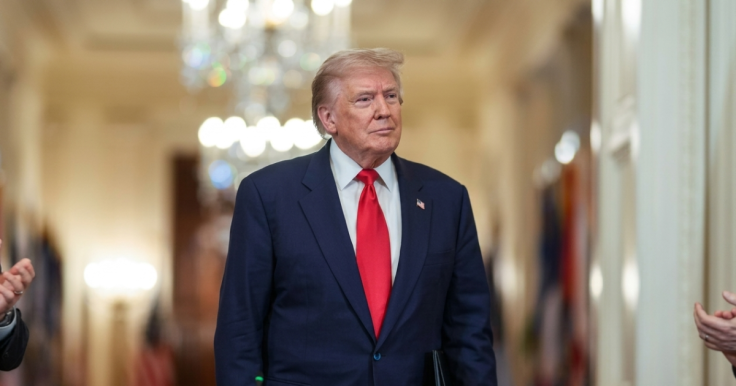
According to Barbabella, the president takes around 325 milligrams of aspirin a day for 'cardiac prevention'. Trump has said the aspirin explains his bruising, while aides have pointed to frequent handshaking. After his October trip to Walter Reed, Trump told reporters he had undergone an MRI, but officials later clarified it was a CT scan of his heart and abdomen.
Barbabella framed that extra imaging as a straightforward add‑on to a 'routine physical evaluation to ensure continued optimal health'. Critics, already wary of how much detail is made public about presidential health, were unconvinced.
Trump has long swatted away questions about his stamina and cognition with trademark swagger. On stage he brags about his energy, mocks rivals' frailty and paints doubters as obsessed. The G7 footage is harder to dismiss. Slow, breathy speeches and cautious movements are the kind of on‑camera moments that can lodge in voters' minds.
That is why the summit matters beyond joint statements and official photographs. It offered rare, relatively unscripted shots of leaders walking, talking and reacting in real time. Those images now sit alongside an official health narrative that some doctors were already inclined to question.
There is still no independent diagnosis in the public record, and the White House maintains there is nothing to worry about. For an administration intent on projecting vigour abroad, however, the question hanging over Trump as he wheezed through his G7 remarks was simple: if this is 'excellent health', what does trouble look like?
© Copyright IBTimes 2026. All rights reserved.
- Recommended For You