'I Voted Republican My Entire Life': Tucker Carlson Backs Out of Supporting GOP in Bitter 2026 Midterm Rift
Carlson's departure from the Republican Party signals a significant shift in conservative media dynamics.
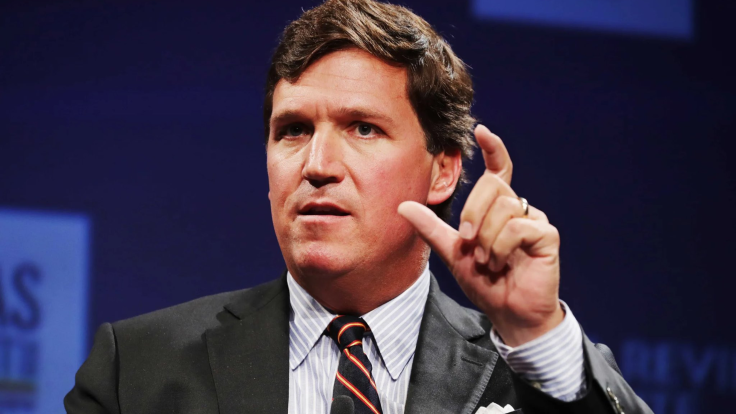
Tucker Carlson has publicly renounced the Republican Party after 35 years, telling a podcast audience that the GOP has put loyalty to a foreign government above the interests of American voters.
The declaration came on 18 June 2026, during a recording of the Canadian podcast Can't Be Censored, hosted by Travis Dhanraj and Karman Wong. Carlson's comments, which went viral four days later, mark one of the starkest public breaks yet between a major conservative media figure and the party he spent decades defending. As the 2026 midterms approach, his exit raises a pointed question for Republicans: how many voters might follow him?
'I'm Out': What Carlson Said And Why It Matters
Carlson's declaration was blunt. During the Can't Be Censored recording, he stated: 'I would not support the Republican Party. There's no chance I would support the Republican Party.' He added: 'I'm not going to support the Democratic Party. I don't know what I'm going to do.'
His central grievance was America's war with Iran, which Carlson attributed to pressure from Israeli Prime Minister Benjamin Netanyahu. 'What we know for certain is that the United States went to war with Iran, a war that we are losing, that we've effectively lost already, because of pressure from the Prime Minister of Israel, Benjamin Netanyahu,' he said in the interview. 'Knowing that is knowing that the US government betrayed the United States. Like, there's no other way to read it.'
Carlson went further, portraying the Republican Party's conduct as not merely mistaken but immoral. 'How could I or any American voter support a political party that's not loyal to the United States, that puts the interests of a foreign country above those of its own citizens?' he said. 'It's not possible to vote for people like that. And I'm not going to.' He also claimed that Donald Trump's 2024 campaign was 'funded largely by people with loyalty to Israel,' a claim he said now shapes policy decisions in ways he regards as contrary to American interests.
He closed with a warning that extended beyond himself: 'I think I voted Republican my entire life. I've been a consistent defender for 35 years of the Republican Party. I mean, very consistent defender. But there's no defending this because it's immoral.' Then, plainly: 'So no, I'm out. And if I'm out, then I think a lot of other people are out.'
Tucker Carlson says he’s officially done supporting the Republican Party after 35 years.
— The Vigilant Fox 🦊 (@VigilantFox) June 22, 2026
Listen closely to how he ends it. That’s not a man quitting. That’s a man counting.
“There’s no chance I would support the Republican Party. Not going to support the Democratic Party. I… pic.twitter.com/ua1gcndlzZ
Trump Clash And The Collapse Of A Media Alliance
The break between Carlson and Trump did not come out of nowhere. Carlson told the podcast hosts that he last spoke to Trump on 27 February 2026, the night before the United States went to war, after a series of conversations in which he said Trump privately understood the risks but proceeded regardless. 'I'm positive he didn't want to do it,' Carlson said. 'He understood the risks. He did it anyway, and I want to know why.'
Trump, for his part, has rejected Carlson's framing. In March, he said publicly: 'If anything, I might've forced Israel's hand.' He subsequently told the Financial Times: 'I call the shots. I call all the shots. [Netanyahu] doesn't call the shots.'
Trump has also responded to Carlson's sustained criticism with public mockery. In a Truth Social post in April, prompted by polling data showing his own favourability far outpacing Carlson's among Republicans, Trump wrote: 'It's easy! Tucker is a Low IQ person, Always easy to beat, and highly overrated!!!' He grouped Carlson with Megyn Kelly, Candace Owens and Alex Jones, describing all four as 'nutjobs,' 'troublemakers,' and 'nut jobs.' The post came weeks after Trump called Carlson a 'broken man' who never recovered from being dismissed by Fox News in 2023.
The Polls: Carlson's Support In Sharp Decline
Recent polling underlines how far Carlson's standing has fallen. A national survey conducted by YouGov for the University of Massachusetts Lowell's Centre for Public Opinion between 26 and 30 March 2026, surveying 1,000 American adults with a margin of error of plus or minus 4.05 percentage points, found Carlson's overall favourability at 17%, with 38% viewing him unfavourably. Among Republicans specifically, 31% held a favourable view and 24% an unfavourable one, leaving 35% with no opinion.
The March figures represent a marked deterioration. A Manhattan Institute survey of Republicans conducted in December 2025 had placed Carlson's favourability among GOP voters at 63%, with 21% viewing him unfavourably. Three months later, that figure had more than halved. Since the March poll was conducted before Trump's most direct attacks on Carlson, further movement downward in subsequent surveys is likely.
Carlson acknowledged during the Can't Be Censored interview that the polling 'tell[s] a pretty clear story' about public sentiment, though he argued that the numbers reflect discontent with the Republican direction, not with him personally.

What Carlson's Break Could Mean For November
The political implications of Carlson's departure go beyond any individual media personality. Research published by the Brookings Institution in June 2026 found that opposition to the Iran war has come 'not from the MAGA base but from non-MAGA Republicans,' a segment showing signs of low turnout enthusiasm heading into November.
The UMass Lowell poll adds another angle. In a hypothetical 2028 presidential contest, only 54% of Republican-identifying respondents said they would vote for Carlson over Democratic candidate Gavin Newsom, a figure that shows how much his standing within the party has narrowed.
During the podcast, when host Karman Wong asked directly whether the midterms would serve as the first real measure of public sentiment, Carlson agreed on their importance. 'The poll numbers now tell a pretty clear story about it,' he said. Whether the voters who share his dissatisfaction choose to register that at the ballot box, or simply stay home, may help decide control of Congress.
For the Republican Party, the loss of one of its most high-profile media defenders is more than a personal falling-out. It is an early sign of how deeply the Iran war has divided parts of the coalition Trump built, and how vulnerable that coalition could be when November arrives.
© Copyright IBTimes 2026. All rights reserved.
- Recommended For You