

'Netanyahu Hates You... Mark Levin Hates You': Carlson's Private Warning to Trump Laid Bare Amid Iran War Fallout
Carlson's candid conversation with Trump exposes internal rifts in right-wing media
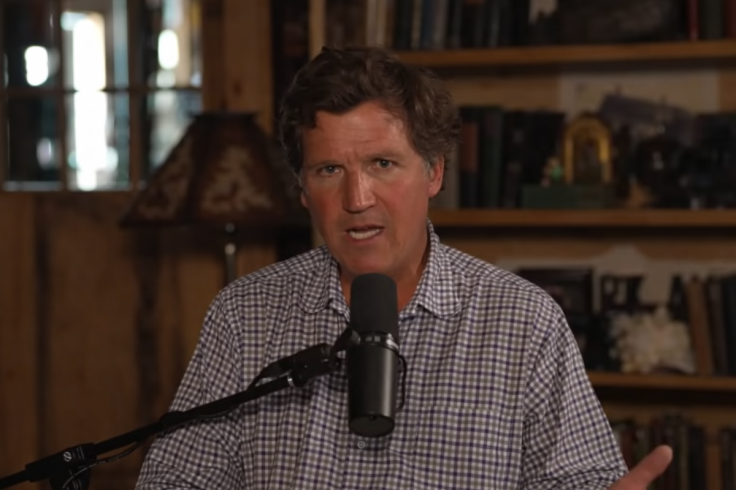
Tucker Carlson has disclosed that he sat across from Donald Trump and told him, to his face, that the very figures pushing him into the Iran war were the same ones who had always despised him — and that the president's response was a matter-of-fact acknowledgement. The account, shared during an appearance on 'The Megyn Kelly Show', adds a striking new dimension to the increasingly fractured relationship between Carlson and the White House and lays bare how deep the divisions run within the right-wing media world that helped elect Trump.
Speaking on the programme, Carlson described the confrontation in blunt, sequential terms. 'I said, "Look, Netanyahu hates you." You know that. They don't like each other at all. "The people pushing you towards this would include Rupert Murdoch, who despises you." Trump knows that, of course. "Marc Thiessen has always hated you. Ben Shapiro, they hate you. Mark Levin hates you, has always hated you,"' Carlson recounted. The list, delivered directly to the president, was not one of political opponents — it was a roll call of voices within and around the conservative movement.
Tucker Carlson says he told Trump to his face that the people pushing him toward war with Iran want to destroy him, and they are doing it on behalf of Israel.
— Space Ape (@EatDaBugs) June 8, 2026
Carlson names Benjamin Netanyahu, Rupert Murdoch, Mark Thiessen, Ben Shapiro, and Mark Levin as the figures driving the… pic.twitter.com/eHdGlWuR5t
'Doing It on Behalf of Israel'
Carlson did not stop at naming names. He told Trump directly: 'The people pushing you to do this want to destroy you, and they're doing it on behalf of Israel,' adding that 'Israel wants the US out of the Middle East and they want to degrade those gulf states' — and that he said all of this 'right to his face.'
Trump's reply, according to Carlson, was simply: 'Yeah, I know.' Three words that, in Carlson's telling, suggest the president was neither surprised nor moved enough to change course.
This account aligns with a broader pattern in Carlson's public posture since the United States joined Israel in launching military strikes on Iran in February 2026. In an interview with ABC News chief Washington correspondent Jon Karl on 28 February, Carlson called the joint US-Israel attack on Iran 'absolutely disgusting and evil,' adding that it would 'shuffle the deck in a profound way' for Trump's political movement.
How Carlson and Kirk Tried to Stop the War
The personal and political rupture between Carlson and Trump has since escalated. In a separate interview with The New York Times, Carlson said: 'The neocons hate Trump, have always hated Trump. I had a first-row seat to this. And now they've destroyed him. And I told him that... What you said about the Iraq war inflamed them, it humiliated them, and they want to destroy you, and this war will destroy you. I said that point-blank right to him.'
TUCKER CARLSON: "I told Trump, 'Netanyahu hates you. Ben Shapiro, Mark Levin, they all hate you'."
— Coinvo (@Coinvo) June 8, 2026
"The ones who pushed him into this war want to destroy him on behalf of Israel, and all he said was 'Yeah, I know'." pic.twitter.com/hprJ1twJh9
That interview also revealed that Carlson and the late Charlie Kirk were among the first within Trump's inner circle to raise alarms. Carlson said that he and Kirk 'were the only people, I think, in June of 2025 to say to the president, to his face: This is a very bad idea. The people pushing this are trying to get you involved in a regime-change war. You've campaigned against that. Don't do this.'
The White House, for its part, has not engaged with Carlson's account of his private warning to Trump. However, when Carlson told Israeli television that Netanyahu had dragged the United States into the war, the administration's response was swift and personal. In a statement to Channel 13, the White House said Carlson 'is a low-IQ person who spreads fake news for cheap publicity,' repeating a description Trump has used himself.
The public airing of what Carlson says he told Trump privately is not simply a media feud — it reflects a genuine fracture within the coalition that returned Trump to the presidency. Carlson's account places him as a dissenting voice who warned early, was heard, and was ultimately ignored. Whether his version of events is accepted or disputed, the exchange he describes — a president who knew everyone around him bore him ill will, and pressed on regardless — raises questions about the decision-making at the heart of US foreign policy at one of its most consequential moments.
© Copyright IBTimes 2026. All rights reserved.