How Hot Is Too Hot? Teachers Demand Legal Classroom Temperature Limits as UK Heatwaves Intensify


As pupils across the UK prepare to return to school in early September, teachers and education leaders are once again asking the same question: how hot is too hot to teach?
The debate comes after another summer of record-breaking temperatures, with June 2026 becoming the hottest June on record as temperatures reached 37.7°C. According to estimates, around 2,700 people died during May and June in England and Wales as extreme heat gripped the country.
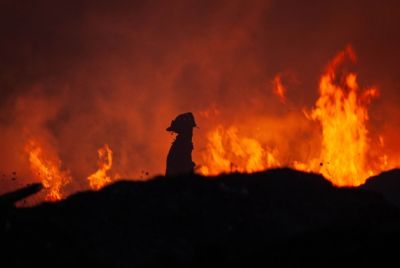
The UK also experienced rare red heat alerts, warning that even healthy people faced a significant risk to life, while wildfires placed emergency services under severe pressure.
Despite increasingly frequent heatwaves, there is still no legal maximum temperature for UK classrooms, leaving school leaders to decide whether it is safe to remain open.
Schools Face Growing Heat Challenges
Government guidance advises schools and early years settings to take steps to manage high temperatures while remaining open wherever it is safe to do so.
However, the lack of a legal temperature limit has fuelled frustration among teachers, many of whom say classrooms become unsuitable for learning during extreme weather.
A discussion on the TeachingUK Reddit forum highlighted the challenges faced by schools during this summer's heatwaves. Teachers described classroom temperatures exceeding 40°C, staff suffering migraines and heat exhaustion, and some schools closing early while others remained open despite the conditions.
During recent heatwaves, meteorologists attributed the extreme temperatures to a 'heat dome', a stalled area of high pressure that traps hot air over a region for an extended period.
Calls Grow for Maximum Classroom Temperatures
Teaching unions are now urging the Government to introduce legal temperature limits for schools.
Daniel Kebede, General Secretary of the National Education Union (NEU), said a maximum working temperature would encourage greater investment in making schools more resilient to rising temperatures.
'A maximum working temperature for schools would encourage investment into making schools heat-resilient, with mitigations such as air conditioning, which would protect learning, the important exam period, and keep staff and children safe and comfortable,' he said.
Pepe Di'Iasio, General Secretary of the Association of School and College Leaders, echoed those concerns, warning that overheating classrooms are likely to become more common as climate change drives hotter summers.
The Climate Change Committee has also recommended introducing maximum workplace temperature regulations, arguing they would improve worker safety while encouraging investment in cooling measures. The committee's long-term ambition is for school temperatures to remain between 16°C and 25°C by 2050.
Protecting Children During Heatwaves
Health experts stress that children are particularly vulnerable during extreme heat because they are less able to regulate their body temperature than adults.
Save the Children UK advises parents and schools to take simple precautions, including encouraging regular hydration, keeping children out of direct sunlight during the hottest part of the day, dressing them in lightweight clothing and recognising the early signs of heat exhaustion.
The charity also advises families never to leave children unattended in parked vehicles, where temperatures can rise rapidly, and to create cooler indoor environments by closing blinds during the day and ventilating homes when temperatures fall.
A Growing Challenge for Schools
The new academic year begins against a backdrop of increasingly frequent heatwaves and growing concern that many school buildings were never designed for prolonged periods of extreme heat.
While ministers continue to advise schools to remain open wherever possible, education leaders argue that rising temperatures require more than temporary guidance.
As hotter summers become more common, the debate is shifting from how schools respond during heatwaves to whether classrooms themselves need to be redesigned for a changing climate. Without greater investment in cooling measures and clearer legal standards, many teachers fear the battle between education and extreme heat is only just beginning.
© Copyright IBTimes 2026. All rights reserved.
- Recommended For You