US Ambassador Huckabee Dismisses Economics and Defence, Credits Israel's Survival to Divine Covenant: 'God Favours It'
Huckabee's theological justification for Israel's existence has sparked international condemnation, highlighting tensions between religious beliefs and diplomatic policies.
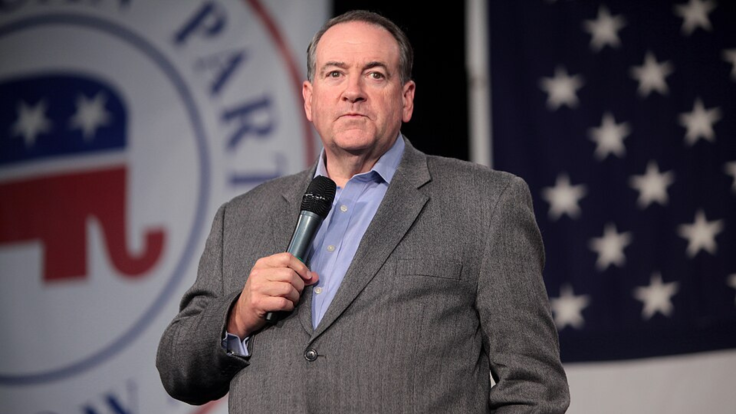
US ambassador to Israel has framed the country's survival not as a product of military power or economic strength, but as the fulfilment of 'divine will', triggering an international diplomatic crisis.
Mike Huckabee, who has visited Israel more than 100 times and described the ambassadorial posting as a 'divine assignment' in one of his first speeches in Jerusalem, used the Carlson platform to articulate a faith-based case for the US-Israel relationship that drew immediate condemnation from across the Arab world.
A social media post circulating widely attributed to him the statement that Israel is successful 'not because of military, economics, or politics, but because God favours it', a characterisation consistent with positions Huckabee has repeatedly and publicly held, even if that precise phrasing does not appear in a verified transcript of the interview.
The Carlson Interview and the 'Fine If They Took It All' Moment
The interview, filmed on 18-19 February 2026, was released online within 24 hours and immediately sparked an international incident. Carlson pressed Huckabee on his reading of Genesis 15, in which God promises Abraham's descendants land stretching from the Nile to the Euphrates; territory that would encompass Israel, Jordan, Syria, Lebanon, and large swaths of Saudi Arabia and Iraq.
Huckabee's reply was unambiguous: 'It would be fine if they took it all.' He added, 'But I don't think that's what we're talking about here today.' When Carlson pushed further, asking whether such a territorial expansion would be 'legitimate', Huckabee responded, 'I'm not sure that it would be.' He also said that Israel was 'not asking to take it over' and that its current ambitions were to 'protect their people', not conquer neighbouring states.
The exchange, as reported by the Jewish Telegraphic Agency, illustrated a fracture between two powerful Christian conservatives with direct access to the White House. Carlson, who has amplified antisemitic voices explicitly and opposes US support for Israel, accused Huckabee of 'prioritising Israel' over the United States throughout the sit-down. At one point, Huckabee gestured to his American flag pin and asked: 'What flag am I wearing here?'
This is not the first time Huckabee has framed his support in theological rather than strategic terms. In his first speech as ambassador at the Friends of Zion Heritage Centre in Jerusalem, he told attendees: 'Without the Jews, I don't have faith.' Israeli Energy Minister Amichai Chikli called the speech 'moving and unprecedented', saying the country had 'never had a US ambassador like this'.
Arab Condemnation and the Diplomatic Fallout
The regional response was swift and unusually unified. Foreign ministers from 14 Arab and Muslim governments jointly condemned Huckabee's remarks as 'dangerous and inflammatory' and a violation of international law, in a joint statement issued within days of the interview going online.
Jordan's Foreign Ministry spokesperson, Ambassador Fuad Al-Majali, described the comments as 'irresponsible, escalatory and absurd', saying they constituted 'a flagrant breach of international law and the Charter of the United Nations'. The Arab League called them 'extremist and lacking any sound basis'. The Organisation of Islamic Cooperation warned that 'extremist ideological rhetoric would fuel extremism and encourage Israel to continue its illegal measures'.
Crucially, the joint statement, signed by countries including Qatar, Saudi Arabia, the UAE and Egypt, all of which maintain US defence partnerships, stated that Huckabee's comments 'directly contradict the vision put forward by US President Donald J Trump, as well as the Comprehensive Plan to End the Gaza Conflict'. The rebuke from Washington's own regional allies underscored the extent to which one ambassador's theological worldview had collided with the administration's stated diplomatic goals.
The Question of Whose Interests He Serves
Carlson himself put the central question directly during the interview: he accused Huckabee of 'working for Israel' rather than for the United States, a charge the ambassador rejected while openly describing Israeli and American interests as inseparable. As Al Jazeera noted, Huckabee repeatedly used 'we' in reference to Israel throughout the exchange, defended convicted spy Jonathan Pollard, and appeared to suggest that the Israeli military exercises greater care to avoid civilian casualties than the US military has in Iraq and Afghanistan.
Mike Huckabee: "Israel is successful not because of military, economics, or politics - but because God favors it."
— Ounka (@OunkaOnX) June 12, 2026
Huckabee is not representing American interests. He's representing his own theology - and using his office to promote it. pic.twitter.com/AQnTXnREYy
The US sends approximately £2.9 billion ($3.8 billion) in annual military aid to Israel, according to The Forward. Huckabee's argument is that strategic and economic justifications for that relationship are secondary to its theological grounding, a framing that critics say substitutes biblical prophecy for foreign policy accountability.
A post from X user @OunkaOnX, which helped amplify the controversy, summarised the critique plainly: 'Huckabee is not representing American interests. He's representing his own theology — and using his office to promote it.'
Whether or not American voters or their representatives in Congress ultimately agree, the Huckabee episode has made explicit what was previously subtext: that the most senior US diplomatic figure in Israel measures the relationship not in dollars, bases or deterrence, but in scripture.
© Copyright IBTimes 2026. All rights reserved.
- Recommended For You