

World Cup 2026: 'Emotional Spending' Frenzy Boosts Chinese Toy Makers as Messi Plushies Become Surprise Hit
Yiwu factories in China see a surge in demand for Messi-themed plush toys as emotional spending trends rise ahead of World Cup.
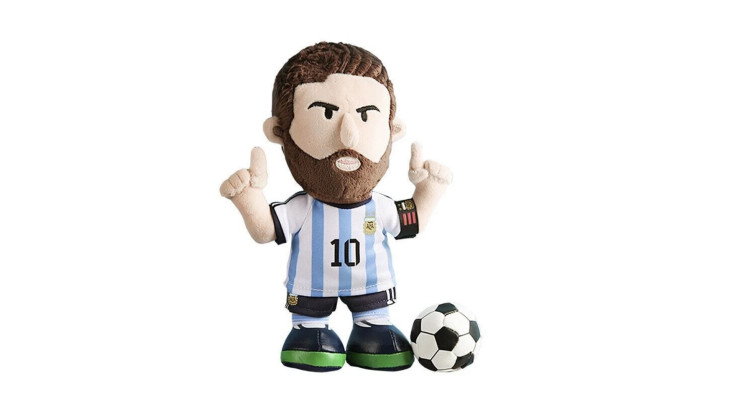
In Yiwu, eastern China, Chinese toy makers are ramping up production of Lionel Messi-themed plush toys ahead of the FIFA World Cup 2026 in North America, tapping into a surge of so-called 'emotional spending.'
The World Cup 2026 plushie boom has turned factory floors in Zhejiang province into unlikely hubs of global football fandom, even as the country's national team once again failed to qualify.
Tournament kicks off on June 11, with Chinese consumers still showing strong engagement with global football culture through merchandise, streaming, and social media.
Messie Plushie Boom Drives Chinese Toy Makers
The factory lies in Yiwu, a city better known as China's wholesale export engine than its sporting culture.
CNA reported that workers are producing thousands of soft toys styled after global football icons, particularly Lionel Messi, whose Argentina shirt has become the unlikely centrepiece of a fast-expanding product line.
One of the most popular items is a small goat plush wearing Messi's number 10 jersey. The design leans into internet shorthand, with 'GOAT' referencing 'greatest of all time.' The toys are manufactured by All Star Partner, a company that holds licensing agreements with several national teams, including Argentina.
According to the firm's chief executive, sales of these plush accessories have increased fivefold compared with the previous World Cup cycle in 2022.
Inside the factory, production lines attach keychains and packaging before shipping the items across China, where demand has reportedly spread from online platforms to physical retail stores.
The products sit alongside similar items featuring Cristiano Ronaldo, France-inspired designs and Spain-themed plush bears.
'Emotional Spending' Shapes Consumer Behaviour
The surge is not being driven by domestic football success. China's national team failed to qualify for the 2026 World Cup, continuing a long absence from the global stage.
Yet interest in the tournament remains strong, particularly among younger consumers who engage with football through digital platforms and influencer content rather than stadium attendance.
Company executives and local sellers describe the demand as part of a wider shift in consumer behaviour often referred to as 'emotional value' spending. Instead of focusing on practical use, buyers are increasingly choosing items that offer comfort, identity expression or simple enjoyment.
A representative from All Star Partner said the appeal of the plush toys lies less in function and more in sentiment, describing them as products that make people 'really happy' when they see them. The company noted that early experiments with a generic teddy bear design only gained traction after it was adapted into football-themed merchandise.
Retailers in Yiwu echoed this sentiment. At one storefront, shoppers were seen browsing racks of jerseys, inflatable accessories and plush keychains, with Messi-themed items reportedly among the strongest sellers.
One local football fan told reporters that younger consumers were under growing pressure and sought small 'emotional exits' through affordable collectibles. An influencer visiting the store added that interest in global football stars remains consistent in China, even when national participation is absent, with fans willing to stay up late to follow matches live.
China's Football Fandom Persists
Even without a national team on the pitch, China continues to play a significant role in global football consumption.
FIFA previously estimated that during the 2022 World Cup in Qatar, Chinese digital platforms accounted for around half of global online viewing engagement, highlighting the scale of interest despite the team's absence.
Manufacturers in Yiwu have been quick to capitalise on this audience, expanding production lines to meet seasonal spikes tied to international tournaments. The World Cup cycle has become a predictable commercial window for toy producers, even as domestic consumption in China faces economic headwinds.
For workers on the factory floor, the rhythm is straightforward: assemble, package, ship. For the companies behind them, however, the stakes are tied to a global audience that extends far beyond China's borders, where a soft toy in a football shirt can carry unexpected commercial weight.
As the World Cup begins in North America, the demand in Yiwu suggests that the tournament's economic reach is no longer confined to stadiums or broadcasting rights. It now stretches into factory workshops producing small plushoes dressed in Argentina blue and white, destined for fans who may never see a match in person but still want a piece of it in their hands.
© Copyright IBTimes 2026. All rights reserved.