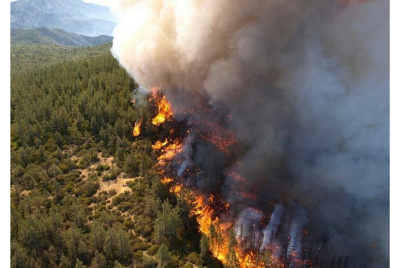
Greenland Wildfires Rage Weeks Early in Unusual Arctic Blaze Spree, Scientists Sound Climate Alarm
Unusual early-season wildfires in Greenland highlight climate-driven changes in the Arctic.

Multiple wildfires have broken out across Greenland weeks before the region's typical fire season, prompting concern among scientists who say the unusual timing and frequency of the blazes may reflect broader climate-driven changes unfolding across the Arctic. Fires were reported near Sisimiut, Greenland's second-largest town, on 14 and 15 June, while another blaze was recorded in the southern municipality of Kujalleq on 17 June, marking an unusually active start to the summer fire season.
Researchers monitoring Arctic fire activity say the outbreaks stand out not because of their size, but because they occurred significantly earlier than expected and appeared across separate parts of the country within days of one another.
Why the Early Timing Has Alarmed Scientists
Scientists say wildfires can occur naturally in Greenland's ice-free tundra regions, but the timing of the latest incidents has raised concern.
Dr Mark Parrington of the Copernicus Atmosphere Monitoring Service said vegetation fires at high northern latitudes are typically more common in July and August, making the emergence of multiple fires in mid-June unusual. Researchers studying Arctic ecosystems have described the early-season outbreaks as another indication that environmental conditions in the region are changing.
The timing is particularly significant because Greenland's fire season has historically been short and relatively limited compared with other Arctic regions.
Greenland Fires Underscore Arctic Concerns
The latest outbreaks have also drawn attention because they were not isolated events.
Satellite observations and historical records show that Greenland has experienced more wildfire activity in recent years than in previous decades. Researchers found no recorded vegetation fires in western Greenland between 1995 and 2007, yet documented 21 wildfire events between 2008 and 2020, including notable fires in 2017 and 2019.
Scientists caution that a single season cannot establish a long-term trend on its own. However, the appearance of several fires across different regions within a matter of days has reinforced concerns that Arctic landscapes are becoming increasingly susceptible to burning.
How Dry Conditions Turned Tundra Into Fuel
Local authorities linked the recent fires to unusually dry conditions following a winter with limited snowfall and a prolonged period of below-average rainfall.
Officials in Sisimiut reported exceptionally dry vegetation and soil conditions, while authorities in Kujalleq noted that little meaningful rainfall had fallen since May. These conditions created an environment where fires could ignite and spread more easily than normal.
Investigations into the precise causes remain ongoing, although local officials believe human activity may have contributed to at least one of the incidents.
Researchers say Arctic warming is increasing the likelihood of such conditions by altering precipitation patterns and extending periods of dryness across northern landscapes.
What These Blazes Could Mean for the Arctic Climate
Scientists are particularly concerned about the implications of more frequent tundra fires in the Arctic.
Unlike many forest fires, tundra fires can burn into carbon-rich soils that have accumulated organic material over centuries. When those soils burn, stored carbon is released into the atmosphere, contributing to greenhouse gas emissions and potentially accelerating future warming.
Researchers warn that this creates a feedback loop in which rising temperatures increase fire risk, while fires themselves contribute to additional warming.
The Arctic is already warming significantly faster than the global average, making the region one of the most closely watched indicators of climate change.
What Happens Next as Greenland Faces Rising Risks
The recent fires have been brought under control, but scientists say the events highlight the need for continued monitoring of wildfire activity across Greenland and other Arctic regions.
While researchers are not predicting that Greenland will experience major fires every summer, they warn that the conditions supporting early-season blazes are becoming more common.
For scientists studying the Arctic, the significance of this month's fires lies not only in the damage they caused, but in what they may reveal about a region undergoing rapid environmental change. As Greenland's climate continues to evolve, early-season wildfires may become an increasingly important indicator of the challenges facing the Arctic in the years ahead.
© Copyright IBTimes 2026. All rights reserved.
- Recommended For You