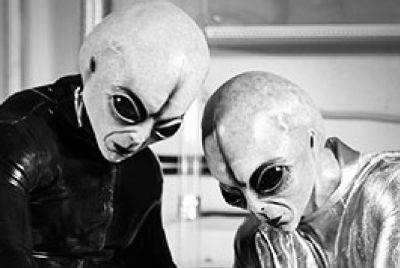
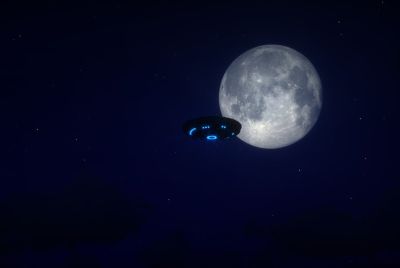
Government Extraterrestrial Secrets: Deep Alien Fears Fuel Gen Z Apocalypse Anxiety
A Sky survey reveals generational divides in beliefs about UFOs and government transparency.
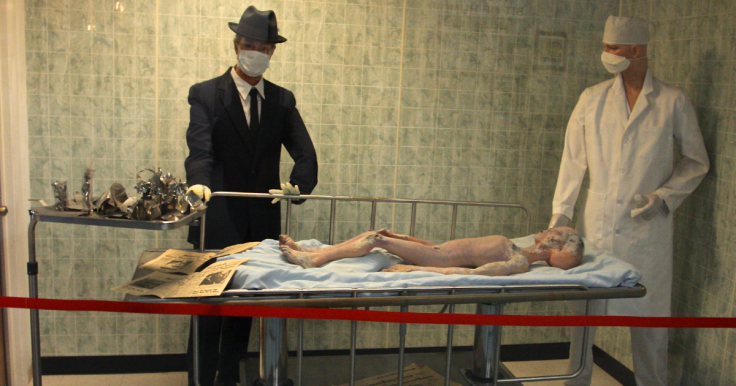
A Sky-commissioned survey published ahead of The Alien Autopsy Scandal has found that 60% of Gen Z in Britain believe world governments know more about UFOs and alien life than they publicly admit, with the research landing in the UK on 12 June and the documentary arriving on Sky Documentaries and NOW the same day.
The figures put younger adults at the sharp end of a broader belief that governments are not telling the full story, and they do so in a way that feels very now, very online, and a little unsettling.
The news came after Sky said the programme would revisit the infamous alien autopsy footage that first emerged in 1995 and became one of the most debated pieces of footage of the decade.
Hayley Reynolds, Sky's head of documentary commissioning, said the film asks 'what do we believe?' and argued that the question matters more than ever in an age shaped by deepfakes, AI and social media commentary.
Government Extraterrestrial Secrets And A Distrustful Gen Z
Across the UK, nearly half of adults, 49%, told researchers they think governments know more about UFOs and alien life than they share publicly.
Among Generation Z, that suspicion jumps to 60%, making them the least trusting cohort when it comes to so‑called government extraterrestrial secrets.
By contrast, only 41% of Baby Boomers said they believed world leaders were sitting on information about aliens.
The gap underlines a generational faultline that has become familiar on other issues too, from climate to Covid, but here it is playing out in the realm of little green men and official secrecy.
Younger respondents in the survey were more likely not just to distrust governments, but to believe that alien life exists and that contact with it could be dangerous.
The poll found that 62% of all Britons think there is alien life somewhere in the universe, yet younger people were notably more inclined to frame that possibility as a threat rather than a benign curiosity.
Nothing in the data proves governments are actually hiding classified files on crashed saucers or recovered bodies.
Alien Secrets In An Age Of AI And Deepfakes
The research also captures a more subtle tension: people might be more willing than ever to believe in aliens, but they are less willing to trust what they see with their own eyes.
More than half of those surveyed, 52%, said they would be more sceptical of UFO footage released today than in the past.
A striking 75% said they would question visual 'proof' in the age of artificial intelligence, where deepfakes and manipulated clips can be generated in minutes and shared to millions before anyone has time to verify them.
That instinctive wariness cuts across age groups, but is particularly pointed for Gen Z, who live in the social‑media firehose.
The Alien Autopsy Scandal And Old Fears Reborn
The Sky series revisits one of the strangest media moments of the 1990s.
In 1995, 18 minutes of grainy black‑and‑white film appeared to show three men in hazmat suits dissecting what looked like an alien corpse, supposedly recovered from a crash site near Roswell, New Mexico, in 1947.
The so‑called 'alien autopsy' footage quickly became a worldwide phenomenon. It drew in film specialists, military analysts and even security services, all trying to determine whether it was genuine or an elaborate hoax.
The new documentary tracks how a group of filmmakers in a North London flat recreated what they described as a 'restoration' of an original post‑war film, and how that recreation spiralled into a cultural touchstone.
Director John Dower, known for My Scientology Movie and BAFTA‑winning Lockerbie, said the project forced him to confront the slippery line between fact and fabrication.
'With its makers describing it as "a restoration" it is still possible that it's based on original frames from an existing post‑war film,' Dower said. 'I've directed some bonkers documentaries in my time but never one in which it is so difficult to work out what is real and what isn't.'
Hayley Reynolds, Sky's acting director of documentaries and factual, framed the series as a question about belief as much as about aliens. 'The Alien Autopsy Scandal asks viewers a deceptively simple question, "What do we believe?"' she said. 'In an age of deepfakes, AI and social media commentary, this question is more relevant than ever.'
She added that the 1990s were a 'golden age of UFO fever' before smartphones and streaming, when shows like The X‑Files and the Roswell myth dominated headlines. The enduring fascination with that era, she argued, helps explain why UFOs and government extraterrestrial secrets are again being debated in parliaments and congresses around the world.
Arron Fellows, creative director at production company Mindhouse, said it was 'incredible' the alien autopsy story had never been told in a premium documentary before.
He promised the same 'storytelling craft and journalistic rigour' that shaped Lockerbie, applied to a tale that is 'as provocative now as it was in the 90s' and that taps into a 'timeless fascination with extraterrestrial life.'
The findings come from a survey commissioned by Sky ahead of the launch of its new documentary series The Alien Autopsy Scandal on Sky Documentaries and streaming service NOW.
The poll set out to gauge how much trust different generations place in official statements on UFOs and alien life, and whether decades of conspiracy theories, social media chatter and, more recently, AI-generated fakery have shifted public opinion.
© Copyright IBTimes 2026. All rights reserved.
- Recommended For You