

Humanity's Reply Button Locked: New Global Protocol Bans Anyone From Answering Alien Signals Without UN Approval
When the call from the stars finally comes, the hardest part may be resisting the urge to answer first.
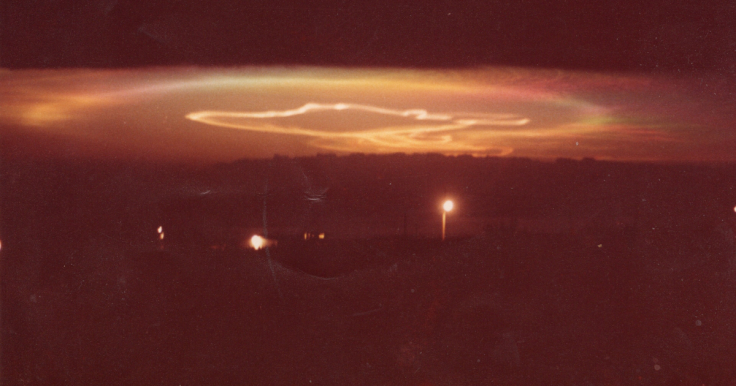
Astronomers who detect a credible signal from aliens after 2026 will be barred from announcing it publicly or sending any kind of reply until it has been painstakingly verified and reviewed through United Nations channels under a newly rewritten global first-contact code.
The International Academy of Astronautics (IAA) has maintained 'post-detection' guidelines since 1989, drafted in an era before social media, satellite mega-constellations and deepfake videos. Those older rules assumed that the biggest problem would be scientific false alarms. The new reality is messier: a single ambiguous signal could now spiral into viral conspiracies, political grandstanding and, in the worst case, chaotic attempts by private actors to shout back into the cosmos.
First trailer for ‘ALIEN ISOLATION 2’.
— DiscussingFilm (@DiscussingFilm) June 5, 2026
Coming soon. pic.twitter.com/GzvjhCehke
Aliens, Verification and a 'Do Not Tweet' Order
The IAA's 2026 update is blunt about the first step if someone thinks they have found aliens. You do not go on television. You do not post a triumphant preprint. You do not drop a breathless podcast interview. You quietly tell other experts and start trying to break your own finding.
Any unusual signal or signature that might suggest extraterrestrial intelligence must be checked by multiple independent organisations using different instruments before anyone breathes the word 'aliens' in public. That covers classic narrowband radio signals, but also more exotic possibilities such as infrared patterns that could hint at colossal alien-built structures orbiting a distant star.

In practice, this is peer review turned up to eleven. Only after separate teams, scattered across the world, are convinced that the detection is real, non-terrestrial and non-human does the process move towards a carefully managed disclosure. Even then, the protocols lean towards written reports and coordinated briefings rather than a single charismatic scientist yelling 'We found them!' into a bank of microphones.
The logic is very 2020s. In an information ecosystem where rumours move faster than corrections, the IAA warns that premature hints of alien contact could fuel 'global panic, disinformation and conspiracy theories' that persist long after the original data have been debunked. The point is not to hide discoveries, but to make sure that when the word aliens is finally used, it comes attached to evidence the public can actually probe.
Aliens and Earth's Locked Reply Button
The more provocative part of the new framework is not about what we say to each other, but about what we are allowed to say to the universe. Here, the IAA has doubled down on its core doctrine. Even if a signal is conclusively confirmed as coming from intelligent aliens, nobody gets to answer on their own.
No national space agency, no billionaire-funded observatory, no exuberant discovery team is permitted to beam a reply without what the document calls 'broad international consultation,' anchored at the United Nations. In other words, the reply button sits behind a glass case labelled 'break only with global consent.'
It is a quietly radical stance. On paper, anyone with a large enough dish and transmitter could fire off a message to whichever civilisation just waved at us. The IAA is saying that might not be theirs to do. How Earth chooses to introduce itself to another species is framed as a shared diplomatic act for humanity, not a branding opportunity or a geopolitical flex.
The details of how that UN-level deliberation would unfold are, to put it mildly, unresolved. Who speaks for the planet is an old question that suddenly feels less theoretical. The new structure at least sketches an answer in institutional form. A standing Post-Detection Sub-Committee, no longer made up solely of astronomers, will fold in ethicists, lawyers and communications specialists tasked with steering both the scientific grind and the public conversation.
The committee is also charged with wrestling with issues the 1989 drafters barely glimpsed. Satellite mega-constellations, such as those being built to deliver global broadband, now clutter the radio spectrum and risk drowning out the faint whispers astronomers hope to catch. At the same time, advances in AI-generated imagery mean that the first 'video proof' of aliens many people see could be a polished fake, shared millions of times before real observatories have even finished pointing their antennas.
'No replies should be sent': Scientists issue alien contact protocol after government declassifies top-secret UFO files https://t.co/KerYyd6TE1 pic.twitter.com/fU9xBWF1mi
— New York Post (@nypost) June 6, 2026
The updated protocols do not pretend to solve those problems. They do something narrower but still ambitious: they set a professional norm that first contact, if it comes, should look less like Independence Day and more like a slow, peer-reviewed thriller. Months of tedious verification, disputed analyses and dense technical reports before the public headline catches up.
Nothing in the document is legally binding, and critics will argue that determined actors could ignore it. For now, though, it is the closest thing humanity has to a rulebook for the moment the universe finally answers back. And at the heart of that rulebook is a stubborn idea. Until the world has argued about it, nobody gets to speak for all of us.
© Copyright IBTimes 2026. All rights reserved.