How Does Keir Starmer's Resignation Impact King Charles And The Monarchy?
Monarch to oversee the appointment of a new Labour leader following Starmer's resignation

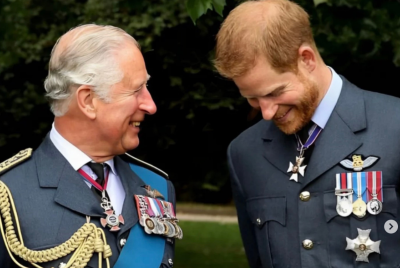
King Charles will be drawn into one of his most sensitive constitutional roles in years after Keir Starmer's resignation as prime minister, with the monarch now tasked with overseeing the appointment of a new Labour leader who can command the confidence of the House of Commons and form the next government.
The King must appoint the next prime minister, invite that person to form a government and then accept Starmer's formal resignation at Buckingham Palace, all while remaining publicly neutral.
How Keir Starmer's Resignation Triggers The King's Role
Sir Keir Starmer has already informed King Charles of his intention to resign as Labour leader and prime minister after his own MPs made plain they no longer believed he was 'best placed' to lead them into the next general election.
Speaking outside 10 Downing Street, Starmer said he had 'heard the answer' from his parliamentary party and would step down with 'good grace.'
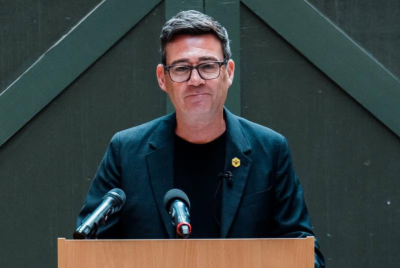
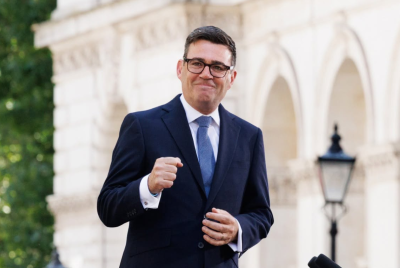
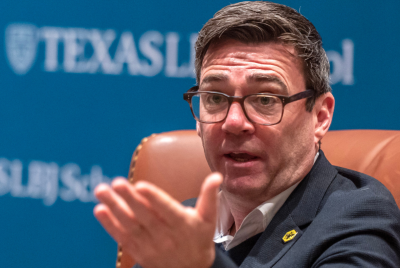
The news came after a chaotic few weeks for the government, capped by Labour's bruising showing in local elections and Andy Burnham's emphatic by‑election win in Makerfield. That result effectively brought the former Greater Manchester mayor back to Westminster as an MP and instant frontrunner to replace Starmer.
Keir has given huge service to our country and I want to thank him for his leadership and dedication during such a challenging period.
— Andy Burnham (@AndyBurnhamGM) June 22, 2026
His decision marks the beginning of a transition and it is important that this process is conducted in an orderly and responsible way. I will…
Under the timetable Starmer has asked Labour's National Executive Committee to adopt, nominations for the Labour leadership will open on 9 July and close by 16 July.
If there is a contest, the party expects to have a new leader in place before Parliament returns from its summer recess on 1 September. Until then, Starmer remains in office.
For the King, the formal choreography begins only once a successor is chosen. Starmer will travel to the Palace for an audience at which he tenders his resignation. Tradition suggests the response is acceptance.
Immediately afterwards, Charles will invite the new Labour leader to form a government.
What King Charles Actually Does When A PM Quits
The Court Circular will record that the incoming prime minister 'kissed hands' on appointment, but in reality the exchange is a handshake, often accompanied by a bow or curtsy if the new premier chooses.
The more literal kissing of hands, in modern practice, tends to occur later at a Privy Council meeting when the incoming prime minister is sworn in as First Lord of the Treasury.
Former leaders have long traded stories about how exposing that first audience can feel. In his autobiography, Sir Tony Blair recalled being warned by a courtier in 1997 that he was not meant to actually kiss Queen Elizabeth II's hand, merely 'brush them gently with your lips.'
He tripped on the carpet and, as he tells it, 'practically fell upon the Queen's hands.' She told him he seemed 'enthusiastic.'
David Cameron, 13 years later, kept things simpler, taking the late Queen's hand but neither kissing it nor kneeling before being asked if he could form a government.
King Charles operates inside the same constitutional constraints his mother did. He must stay publicly neutral, but he is entitled to 'advise and warn' his prime ministers in private.
Starmer And The King: A Short But Dense Relationship
Starmer was Charles's third prime minister in less than four years. Liz Truss, already in office when Elizabeth II died in September 2022, became his first. Rishi Sunak followed just weeks later. Starmer then arrived in July 2024, swept in by a Labour landslide after 14 years of Conservative government.
By all accounts, the rapport between the King and Starmer was unusually warm. The monarch, only two years into his reign and still coming to terms with a cancer diagnosis, told the new prime minister at their first Buckingham Palace meeting that he must be 'utterly exhausted and nearly on your knees' after the election campaign.
There was, insiders say, a shared interest in social issues and a mutual respect for each other's back stories.
As a human rights barrister, Starmer had once been on record joking about his republican leanings, telling a filmmaker in 2005 that it was 'odd' to be made Queen's Counsel when he had previously proposed the abolition of the monarchy.
By the time Elizabeth II died, his tone was very different. He paid tribute in the Commons to her 'glorious' 70 years of service and praised Charles as a 'devoted servant' of the country with a long‑standing commitment to the environment and fairness.
The relationship quickly moved beyond platitudes. In 2025, Starmer joined the King on a rare joint engagement to a Cornish housing development inspired by Charles's interests in architecture and community design. Downing Street had to deny dragging the monarch into politics as the visit coincided with the government's pledge to build 1.5 million homes before the next election.
A year later, the government again leant on the King, this time for high‑stakes diplomacy. Charles undertook a state visit to the United States at ministers' request, meeting President Donald Trump, addressing Congress and, according to senior aides, helping to steady a fraying UK‑US relationship after Trump repeatedly lambasted Starmer over the war in Iran.
Asked if it was awkward that Trump appeared closer to the King than to the prime minister, a palace official batted the idea away, insisting 'it's not a competition' and that Charles was there 'to support the Government, to help the Government.'
A Monarch Above The Fray, But Never Entirely Outside It
The impact of Starmer's resignation on the monarchy is not about royal popularity, it is about workload and risk. King Charles will now welcome the fourth prime minister of his reign in as many years, a churn that makes Liberal Democrat leader Sir Ed Davey's line about a 'merry‑go‑round of prime ministers' sound less like rhetoric and more like admin.
Each change means a new political relationship to build, new red boxes to read, another style of governing to navigate. The King has managed that cycle before, moving from Truss's ultra‑short premiership to Sunak's technocratic caution and on to Starmer's focus on child poverty, employment rights and immigration.
Andy Burnham is heavily favoured to be the next name on that list. He has already confirmed he will stand in the Labour leadership contest, and Wes Streeting, once seen as his main rival, has endorsed him as the candidate who can 'win the fight of our lives against the force of nationalism.'
Starmer, for his part, will leave Downing Street as the shortest‑serving Labour prime minister in history, though his time in office will still have outlasted both Truss and Sunak.
He plans, as he put it, to move from the 'biggest job in the country' to the 'most important job', concentrating on being 'the best husband' to his wife Victoria and 'the best dad' to his children.
The King's part in this drama is not ceremonial fluff. The appointment of a prime minister is one of the few remaining personal prerogatives of the sovereign.
The unwritten rule, however, is simple enough. He must choose the person who can clearly carry a working majority in the Commons, which in practice means the leader of the governing party.
© Copyright IBTimes 2026. All rights reserved.
- Recommended For You