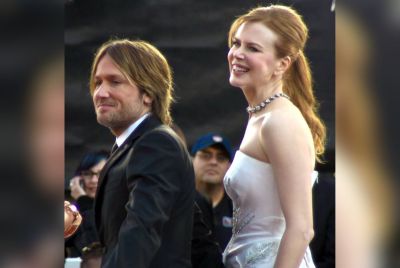
Nicole Kidman, Keith Urban Divorce: Court Docs Reveal Shocking Custody Split and 'Prepaid' Support
Inside the custody arrangement and financial settlement of Nicole Kidman and Keith Urban's divorce.

Nicole Kidman and Keith Urban's divorce has taken a revealing turn in Nashville, where newly filed court documents from January 2026 set out a stark custody split and what is described as 'prepaid' support for their two daughters, Sunday Rose and Faith Margaret. The papers confirm that Kidman will be the girls' primary residential parent, while Urban's contact is strictly scheduled and financially settled in advance.
The latest legal details emerge just as the former couple have been publicly presenting a united front. Over Father's Day weekend, Kidman used Instagram to pay tribute to fathers, including Urban, sharing black‑and‑white photographs on her Stories.
One image showed a young Kidman with her late father, Antony Kidman, and the second showed Urban carrying Sunday and Faith on his back. She captioned the montage, 'Happy Father's Day to all the fathers.'
The understated message landed days after Urban himself broke his post‑divorce silence. On 20 June he posted a simple birthday greeting to Kidman as she turned 59, splashing the words 'Happy birthday Nicole Mary' across a colourful backdrop.
No gushing declarations, no long caption, just a public acknowledgement that, whatever has happened between them, they still have a family to show up for.
Inside The Custody Split
The newly surfaced dissolution agreement, signed by Kidman on 6 September, lays out how that family is now structured. According to the court documents, Kidman is designated the 'primary residential parent' of Sunday and Faith and will care for them for 306 days of the year. Urban is allocated 59 days, a division that is as precise as it is revealing.
Urban's time with the girls is mapped out to the hour. The filings state that he will have custody from 10am on Saturdays to 6pm on Sundays every other weekend. Major holidays are divided in a way that tracks cultural expectations, with Kidman having the children on Mother's Day and Easter, and Urban spending Father's Day and Thanksgiving with them.

On paper, then, the Nicole Kidman, Keith Urban divorce looks very much like a traditional primary‑parent arrangement, with an overlay of celebrity logistics. The language is polite but firm.
Both parties have agreed they 'will not speak badly of each other or the members of the family of the other parent.' They must also 'encourage each child to continue to love the other parent and be comfortable in both families.'
Money, Time And Optics
The section on money is where things get a little unusual. The agreement specifies that neither Kidman nor Urban is required to pay ongoing child support. Instead, the court records state that Urban has 'already prepaid all child support obligations.'
On its face, that wording suggests a financial clean break designed to avoid monthly wrangling. Both are wildly successful in their own right, but prepaying child support effectively folds the costs of raising Sunday and Faith into the broader financial settlement. It is neat, efficient and, for outsiders trying to follow the money, slightly opaque.
There is no elaboration in the documents on how much was prepaid or how it was calculated. Everything else about that arrangement should be taken with a grain of salt.
What the paperwork does make crystal clear is the moral script both parents are meant to follow. The 'no bad‑mouthing' clause is there in black and white for a reason. Divorce coach Arabella Paul, who has previously discussed the impact of separation on families, said that staying 'civil' is not just a nice idea, it is essential.
'Love your kids more than you hate your partner' is a phrase I often say, Paul explained. In her view, divorce itself is not the thing that damages children. 'Divorce is not bad for your children; it's the conflicts that cause issues, be it conflicts in divorce or conflicts in the marriage.'
Paul also advises parents going through a split to 'talk to yourself positively' as they adjust to new routines, something that sounds like self‑help fluff until you are the one staring at a calendar full of handovers and missed birthdays.
The Kidman‑Urban agreement reads almost like a case study in that approach. Highly scheduled contact, no formal support cheques changing hands every month, explicit instructions to protect the children's relationships with both parents.
On Instagram, the same ethos is dressed up with grainy family snapshots and simple captions. Offline, it is written into law.

Public Messages, Private Realities
It can be recalled that Kidman and Urban's separation in September 2025 shocked fans who had watched their nearly 20‑year marriage from afar. The pair met in 2005, married in June 2006, and welcomed Sunday and Faith during what often looked, from the outside at least, like a steady, low‑drama union in the sometimes mad world of celebrity marriages.
When the divorce was finalised in January 2026, cited under the catch‑all of 'irreconcilable differences,' there were no public slanging matches, no messy courtroom showdowns. The most visible sign of change was silence. For months, both kept any direct reference to the split offline.
A birthday greeting here, a Father's Day tribute there, and suddenly followers are reading their own hopes into two very bland pieces of text. Are they reconciled, are they just being polite, or are they simply following the spirit of their own court order. The truth is probably less dramatic than the fan theories, but not less important.

For children, divorced or otherwise, seeing their parents acknowledge each other in a half‑decent way is bigger than any settlement figure. In this case, the law might have forced Kidman and Urban to codify that civility, but their posts suggest they are choosing to lean into it publicly.
The contrast between the warmth of those family pictures and the hard edges of a 306‑day versus 59‑day split is hard to ignore. So is the fact that, somewhere behind the scenes, the question of who pays for what has already been boxed off as 'prepaid.'
Whether this carefully managed peace holds as Sunday and Faith grow older and more opinionated is a different question entirely.
© Copyright IBTimes 2026. All rights reserved.
- Recommended For You