

Ebola Scare at Glasgow Hospital Ends as Isolated Patient Tests Negative Following Health Alert
Glasgow patient tests negative for Ebola, easing fears of the virus's presence in the UK.
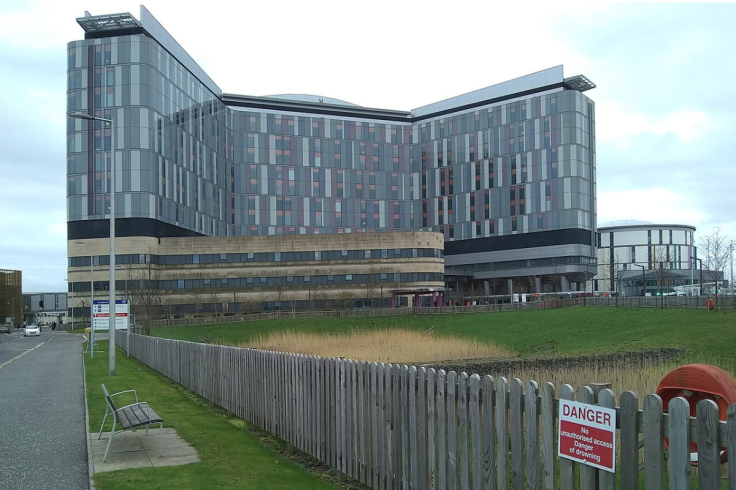
All fears of seeing the first case of Ebola in the United Kingdom have now been laid to rest, after a patient admitted to a Glasgow hospital on Tuesday, 30 June, tested negative for the deadly disease, according to health officials.
'The test result has now been received and is negative,' a spokesperson from Public Health Scotland (PHS) said.
The patient, whose identity remains unknown, was admitted to the Queen Elizabeth University Hospital (QEUH) in the early hours on Tuesday.
After noticing symptoms tied to the disease, the necessary tests were carried out to confirm whether the individual had contracted the Ebola virus.
Had the patient been found to have the disease, it would have been the first case in the UK since an outbreak in the Democratic Republic of Congo and Uganda in May.
The outbreak in Africa has been declared a public health emergency of international concern by the World Health Organisation (WHO).
However, because Ebola is not an airborne virus, it is not a disease that can be contracted easily.
Hence, there were no ward closures at the QEUH, and it confirmed patients and visitors were not being advised to stay away.
Further, PHS confirmed that it followed standard protocols to properly determine if anyone coming to the UK had Ebola. Among the procedures followed were contact tracing, clinical assessment and precautionary testing.
Aside from that, PHS also confirmed that it had activated the UKHSA Returning Workers Scheme (RWS) after being made aware of the suspected case. This measure was designed to protect and monitor the health of those who may travel from the UK to affected areas for their work.
The Glasgow case comes just a week after France confirmed its own first case. This involved a doctor who had recently returned from a humanitarian mission in the Democratic Republic of Congo. The medical practitioner was immediately admitted to a specialised facility and is in a stable condition, according to the French Ministry.
What is Ebola?
For those who may not be aware of what the Ebola virus is, it is a rare but often deadly disease that attacks the human body's immune system and organs. Normally, the virus affects animals, particularly fruit bats.
However, Ebola could potentially affect humans as well. This occurs when a human eats or comes into contact with animals infected by the disease.
From there, the virus typically spreads from direct contact with blood or other bodily fluids, contaminated objects or animals. It ideally takes two to 21 days for symptoms to appear. Among the early signs of contracting the disease are flu-like symptoms or malaria, with fever, headache and tiredness.
As the disease progresses, vomiting and diarrhoea develop and could ultimately lead to organ failure. In some cases, affected individuals develop internal and external bleeding.
PHS Closely Monitoring Travellers From Ebola-Affected Countries
It was a great relief for the UK, considering the reported cases of Ebola in nearby regions.
Aside from the DRC, outbreaks have also been reported in Uganda. About 138 people have reportedly died from the disease, two of them in Uganda.
As for the UK, the last confirmed cases of Ebola involved three health workers who had returned from West Africa in 2014 and 2015. They were treating Ebola patients at the time. All three were treated at a high-level isolation unit and made a full recovery. There were no onward cases of transmission.
According to infectious disease experts, Ebola is a highly dangerous pathogen, but it is not an airborne virus like flu or Covid. It requires direct contact with infected bodily fluids to spread, and individuals usually only become contagious after developing symptoms.
© Copyright IBTimes 2026. All rights reserved.