Erling Haaland Image Found on Cocaine Bricks in Ecuador: Why Was the Footballer's Face Used?
Lionel Messi's image also reportedly appearing on another seized package

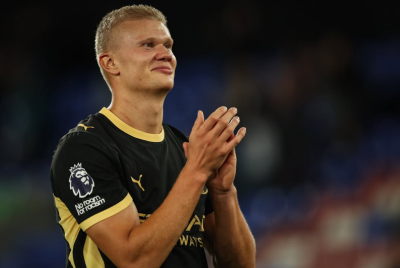
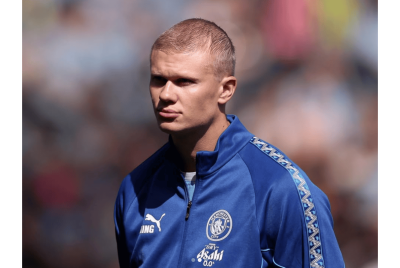
Erling Haaland's face has appeared on an unlikely item after Ecuadorian anti-narcotics police seized 469kg of cocaine near the Colombian border.
According to reports, the packages, discovered inside a truck on 11 August, carried stickers featuring the Norway football star, with some also showing Lionel Messi.
Haaland has reportedly no connection to the cocaine shipment or the trafficking operation. Instead, the images appear to be part of a long-standing practice in which criminal groups use logos, symbols and celebrity likenesses to identify drug shipments.
469kg Cocaine Shipment Seized Near Ecuador's Border
According to officials, the police intercepted the truck following an anonymous tip while operating along the Pan-American Highway in the Guagua Negro sector, south of Tulcán in Carchi province.
Officers found 370 packages concealed inside a modified compartment and false bottom. A woman identified as María R., who was carrying Colombian identity documents, was arrested as the alleged driver.
Erling Haaland's name and image turned up on hundreds of cocaine bricks seized by Ecuadorian police near the Colombian border. Officers found 469 kilograms of cocaine hidden in a truck and arrested a Colombian woman. pic.twitter.com/fHChHVcpH3
— Al Jazeera English (@AJEnglish) August 13, 2026
The cocaine was estimated to be worth about $842,000 (£624,000) on Ecuador's domestic market. Authorities estimated its value at more than US$11 million (£8 million) in the United States and more than US$19.6 million (£14.5 million) in Europe.
Police released photographs and video showing the packages, several of which prominently displayed Haaland's name and image.
Why Was Erling Haaland's Face on the Cocaine?
Ecuadorian police have not publicly explained why Haaland was selected for this particular shipment. However, celebrity branding on cocaine packages is not unusual in the region.
Drug trafficking organisations have previously used footballers, celebrities, animals, commercial logos and other distinctive images on packages. The markings can help criminal networks identify different batches and shipments as drugs move between suppliers, transporters and buyers.
The labels can also indicate which organisation produced a shipment, identify its intended destination or customer, and help different groups distinguish their own packages from others.
In other words, the Haaland image does not mean the footballer was involved with the shipment. It appears to have been used as an underground branding marker.
Why Did Traffickers Choose Haaland?
There is no evidence that Haaland approved the use of his image or even knew about it.
His selection may simply reflect his enormous visibility. The Manchester City striker became one of the most recognisable footballers at the 2026 World Cup, where he scored seven goals across four matches.
His distinctive appearance and huge online following also made him a particularly recognisable figure for an unofficial shipment label.
The packages reportedly showed Haaland in a Norway shirt, with some designs incorporating football and World Cup imagery. At least one other package carried Messi's image, suggesting the practice is not limited to one player.
Ecuador Remains a Major Cocaine Transit Hub
Ecuador has become an important logistical hub for cocaine trafficking, with drugs largely originating in neighbouring Colombia and Peru before being moved towards Central America, the United States and Europe.
Police said local criminal groups work alongside Colombian and Mexican organisations to stockpile and transport narcotics. Authorities reported seizing 80 tonnes of drugs during the first half of 2026. That followed nearly 215 tonnes seized in 2025 and almost 295 tonnes in 2024.
The latest seizure adds another unusual chapter to Ecuador's ongoing fight against drug trafficking, with Haaland's unexpected appearance on the packages drawing attention far beyond the criminal investigation.
© Copyright IBTimes 2026. All rights reserved.
- Recommended For You