What Happened to Lionel Messi? Emotional Icon Reveals Personal Turmoil Behind World Cup Goal Tears
Messi's record-breaking performance overshadowed by personal struggles.
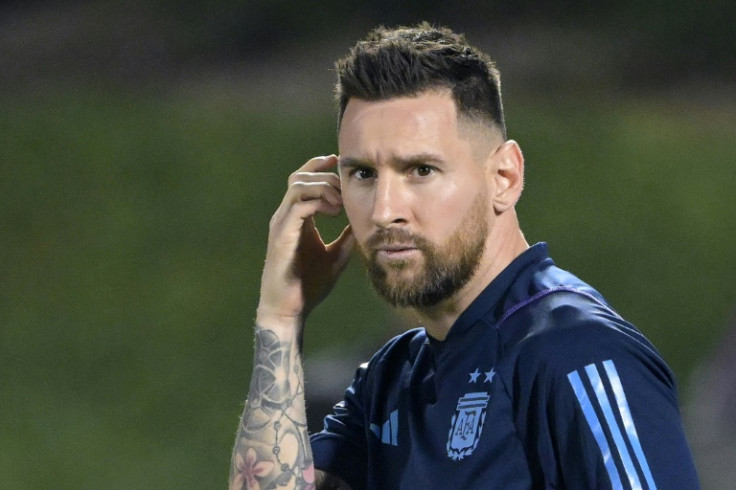
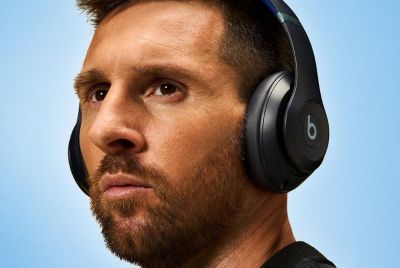
Lionel Messi has revealed that the tears he shed after scoring for Argentina at the World Cup in Kansas City on Saturday were triggered by private 'difficult days' and a matter 'completely unrelated to football,' even as he delivered a record-breaking hat-trick in a 3-0 win over Algeria.
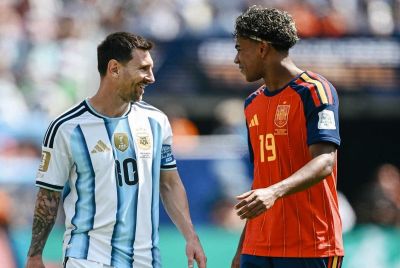
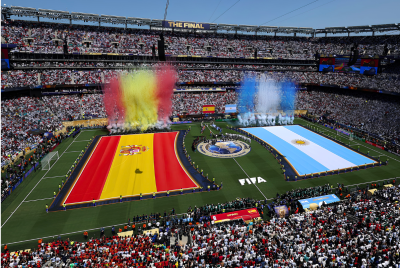
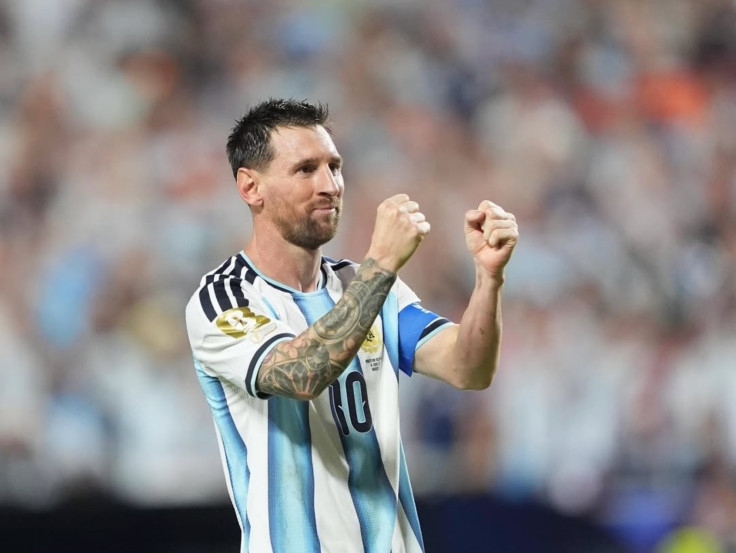
The 38-year-old captain was making his 200th appearance for Argentina in their opening match of their World Cup defence. He curled home a trademark left-footed strike after 18 minutes, lit up the stadium, then suddenly seemed overwhelmed. Team-mates piled in, the crowd roared, and amid the chaos cameras caught Messi wiping his face with his shirt, clearly emotional in a way that went beyond the usual adrenaline of a big tournament goal.
The news came after days of speculation about whether Messi was fully fit. He had been substituted early in his final Inter Miami match before the World Cup because of muscle fatigue, prompting worries that his body might finally be losing its argument with time. Instead, he turned up in Kansas City and produced one of those performances that bends numbers and history to his will.
His hat-trick against Algeria, his first ever at a World Cup, took him to 16 goals in the finals. That haul draws him level with Germany's Miroslav Klose as the joint top scorer in the competition's history, a record that once felt nailed to the name of a penalty-box poacher but now has Messi's fingerprints all over it.
🥹 LA EMOCIÓN DE LIONEL MESSI EN SU PRIMER PARTIDO DEL MUNDIAL
— Urgente24.com (@U24noticias) June 17, 2026
El debut de la Selección Argentina ante Argelia estuvo cargada de emoción. En el primer gol, Messi lloró y todos nos emocionamos con él.
El capitán argentino hizo tres goles para la victoria 3-0 ante Argelia y en… pic.twitter.com/DQJrkxMLuf
It was also another mark in a long list of statistics that somehow still manage to shock. He has now played at six World Cups, the first footballer ever to do so, and he did it exactly 20 years to the day since his debut at the tournament, when he scored in Argentina's 6-0 demolition of Serbia and Montenegro. Saturday was, in a way, an anniversary party. It just came with a wobble of raw emotion nobody quite expected.
Emotional Messi Lifts Lid on Private Turmoil
After the match, Lionel Messi was asked directly about the tears. He did not offer specifics, but his answer cut through the post-game euphoria.
'Why did I cry? It was something completely unrelated to football,' he told reporters. 'I went through some difficult days, but I'm grateful to the entire delegation and my team-mates because they were always by my side, giving me a lot of strength to help me get through it.'
There was no further detail. No explanation of what those 'difficult days' involved, or if they are still ongoing. Argentina's federation did not expand on his remarks either, preferring to keep the spotlight on the result and his performance.
Crying Lionel Messi reveals he's suffering mystery personal heartbreak after equalling World Cup's goal record - with his wife watching in the stands https://t.co/flatOxHXfo
— Daily Mail (@DailyMail) June 17, 2026
Nothing is confirmed yet so everything should be taken with a grain of salt. What is clear is that the greatest player of his generation chose to let the world see him crack, just a little, at the height of his career.
It can be recalled that Messi's relationship with the World Cup has been built around public emotion. The tears after the 2014 final defeat. The stunned, almost empty look after the 2018 exit. Then the release in Qatar in 2022, when he finally lifted the one trophy that had stalked his career. Saturday carried a different flavour. This was not about the weight of a shirt or the judgement of history. It sounded, from his own words, like life intruding on the pitch.
He admitted as much when he reflected on the longer journey. 'It makes me very happy to have lived through everything that came my way,' he said. 'What I'm living through now is the cherry on top. I'm very happy and grateful for this wonderful group, I enjoy it so much.'
Messi knows this is almost certainly his last World Cup and he is playing it as a man who understands endings. The hat-trick, the records, the ovation as he walked off in the 80th minute with his name echoing around Kansas City Stadium, all of it felt like part of a carefully watched farewell tour. Then he cried, reminding everyone that even fairytales come with some off‑screen stuff we never see.
Behind the Tears, Messi Still Decides Everything
For Argentina's coaching staff, the emotional subplot does not change the cold reality. They still need Lionel Messi on the pitch if they are to become only the third nation to defend the World Cup title. On Saturday, he looked essential.
This was Argentina's first win in an opening World Cup match as defending champions, ending a weird hoodoo that saw them lose their openers in 1982 and 1990. Any suggestion that the side might somehow be freer without him was dismissed by midfielder Alexis Mac Allister.
'There are no words to describe him. If anyone thought this team was better without Leo, today it was proven that the opposite is true,' Mac Allister said. 'He is our most important player. We need to build a team around him, and we are doing it.'
That last line is telling. Argentina's 2022 triumph in Qatar was framed as the moment Lionel Messi finally got the support system he needed. Two years later, the structure looks even more tuned to him, even more willing to do his running while he picks his moments. At 38, he paces himself, then cuts matches open in flashes that still feel unfair.
The muscle issue that saw him taken off early for Inter Miami last month had raised doubts that he could sustain that level across another long tournament. His substitution after 80 minutes against Algeria, to a full standing ovation, looked far more like management than concern. No grimace, no prodding at a hamstring, just the slow walk of a man soaking it up.
For starters, the stakes around every minute Messi plays are now enormous, for Argentina and for neutrals who just want to squeeze in a few more games of him at this level. The next test comes quickly. Argentina face Austria on Monday 22 June at 18:00 BST in their second Group J match, and there will be intense focus on whether the captain starts again and how much he plays.
The broader question, the one that lingers behind the statistics and the celebrations, is less tactical. How does a player carry private turmoil into a World Cup spotlight and still perform with that kind of clarity? Messi chose not to share the details. He gave the headline and kept the story to himself.
Maybe that is the deal now. The public get the goals, the records, the brief flicker of tears on a giant screen. The rest stays in the dressing room, or at home, or locked away behind the quiet gratitude he keeps coming back to. Either way, Argentina know one thing. Whatever is going on in his life, when Lionel Messi steps over the white line, the World Cup still bends around him.
© Copyright IBTimes 2026. All rights reserved.
- Recommended For You