'An Example of Leadership': World Leaders React As Modi Becomes India's Longest-Serving Elected Prime Minister
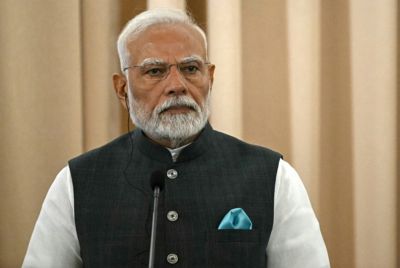
Narendra Modi becomes India's longest-serving continuously elected PM, surpassing First Prime Minister Jawaharlal Nehru's record.

Narendra Modi is set to create political history on June 10 by becoming India's longest-serving continuously elected Prime Minister, completing 4,399 consecutive days in office and surpassing the record previously held by Jawaharlal Nehru.
The milestone has prompted congratulatory messages from world leaders, political figures, and business representatives, many of whom have pointed to India's evolving position on the global stage during Modi's tenure.
The Ministry of External Affairs (MEA) also marked the occasion by highlighting what it described as a transformation in India's foreign policy over the past 12 years. Supporters of the Prime Minister view the achievement as more than a personal record, arguing that it reflects India's economic growth, expanding diplomatic reach, and increasing influence in international affairs.
As PM Modi enters another chapter of his leadership, the milestone has become a focal point for discussions about India's place in the world and its ambitions for the years ahead.
World Leaders Praise Modi's Leadership And India's Global Rise
The record has drawn recognition from several international leaders, who used the occasion to acknowledge both Modi's longevity in office and India's growing influence.
Sri Lankan President Anura Kumara Dissanayake described the achievement as a reflection of public confidence in Modi's leadership. In a letter dated June 8, he wrote, 'This milestone is a testament not only to your years in office, but also to the trust and confidence that the people of the world's largest democracy have repeatedly placed in your leadership.'
Dissanayake also said that India's economic and social development under Modi had served as an example for countries beyond its borders, including Sri Lanka.
Papua New Guinea Prime Minister James Marape praised Modi's leadership style and India's development journey. Calling him 'a role model and an example of leadership', Marape highlighted India's efforts to improve living standards, stating, 'Lifting over 200 million people out of poverty to a good life today is an amazing feat.'
Marape also reaffirmed his country's commitment to strengthening ties with India and recalled Modi's 2023 visit to Papua New Guinea, which was the first by an Indian Prime Minister.
Trinidad and Tobago Prime Minister Kamla Persad-Bissessar similarly recognised India's growing influence in international affairs. She said that 'under the leadership of Prime Minister Modi, India has evolved as a leading voice on global matters.'
Persad-Bissessar pointed to developments in foreign policy, infrastructure, economic growth, and social welfare while also reflecting on Modi's political journey from humble beginnings to leading a nation of more than 1.4 billion people through three terms.
The MEA also highlighted India's role in international diplomacy and development initiatives. In a post on X, the ministry stated, 'Over the last 12 years, India's foreign policy has witnessed a remarkable transformation, strengthening both Brand India and India's standing on the global stage under the leadership of PM Narendra Modi.'
The ministry cited India's role as a voice for the Global South, its climate initiatives, including the International Solar Alliance, and the expansion of digital public infrastructure such as UPI beyond India's borders.
Government And Industry Leaders Highlight Twelve Years Of Change
Government representatives and business leaders have also used the occasion to reflect on what they view as major achievements during Modi's years in office.
Union Minister Jyotiraditya Scindia described the period as one of 'unprecedented transformation' and said the Prime Minister's record represented an important moment in India's development.
'On this day, PM Modi has established himself as the longest-serving democratically elected Prime Minister of India,' Scindia said, adding that India's domestic production rate had averaged 7 per cent over the past 12 years.
He also highlighted several initiatives and infrastructure projects, including India's G20 presidency, International Yoga Day, and Vaccine Maitri. Referring to infrastructure growth, Scindia said, 'Whether we talk about national highways, which have increased to 1.5 lakh kilometres, in the field of civil aviation, we are going from 74 airports to 160, in the railway sector, there has been a fourfold increase in the development rate and capacity of railways.'
Looking ahead, Scindia said that India was advancing as the world's fourth-largest economy and that the country's objective remained 'Developed India 2047'.
Business leader Niranjan Hiranandani, Founder and Chairperson of the Hiranandani Group, described Modi's rise as an example of the strength of Indian democracy.
'We are extremely blessed that we have an able man who came from a common background,' he said, arguing that India's democratic system allows ordinary citizens to rise to the highest office.
Reflecting on Modi's years in power, Hiranandani said, 'In the years that our Prime Minister has been in the Prime Ministership, he has moved upwards year by year. So, all the 12 years that he has served our country, the difference is there to see.'
He also pointed to economic growth, welfare programmes, and the Atmanirbhar Bharat initiative as key developments during the Prime Minister's tenure.
BJP MP Ashok Chavan echoed those views, expressing confidence in Modi's future leadership. 'Prime Minister Modi has done excellent work during his tenure. He will continue to work in the same manner ahead,' Chavan said.
As Modi surpasses Nehru's long-standing record of 4,398 consecutive days in office, supporters see the achievement as a marker of India's economic, diplomatic, and strategic aspirations. For them, the milestone represents not only political longevity but also the direction they believe the country is taking on the global stage.
© Copyright IBTimes 2025. All rights reserved.
- Recommended For You