

Depression and Intimacy Issues: The Dangerous Side Effects of Donald Trump's Missing Hair-Loss Drug
Trump's latest White House medical report has quietly dropped any mention of a controversial hair-loss drug tied to depression and sexual side effects.

Donald Trump is facing fresh scrutiny after a key hair-loss drug he has reportedly taken for years vanished from his latest White House medical report, prompting warnings from experts that the medication's links to depression and intimacy problems could have serious implications for the 79-year-old President's health and fitness to govern.
Trump's health disclosures have long been a battleground. His first presidential run in 2015 was accompanied by an infamous, gushing note from his then-personal physician Harold Bornstein, who claimed Trump would be the 'healthiest individual ever elected to the presidency.' Bornstein later admitted in 2018 that Trump had 'dictated that whole letter,' confirming what many had suspected about the theatrical way his medical status was being sold to voters rather than clinically described.
For years, Trump took a hair-loss drug — Propecia (finasteride).
— Dan Diamond (@ddiamond) June 4, 2026
Now it’s no longer on his medical reports.
I asked the White House if Trump still uses it, and officials said they’re not obligated to disclose all his medications. https://t.co/80QluMs2Ap
The latest flare-up centres on a hair-loss medication previously listed among Trump's prescriptions. The drug, commonly used to treat male pattern baldness, is known for a cluster of troubling side effects, including depression, sexual dysfunction and, in rare cases, enlarged male breast tissue. It was not mentioned in Friday's late-night, three-page health memo, which declared the president 'in excellent health' and 'fully fit' to run the country again.
Asked why the hair drug had disappeared from the paperwork, the White House gave a terse answer to the Washington Post. 'The current report reflects all medications deemed clinically relevant to disclose at this time,' officials said. They doubled down with a second line intended to shut down speculation, insisting: 'No additional undisclosed conditions or procedures materially affecting his health status were omitted from this report.'
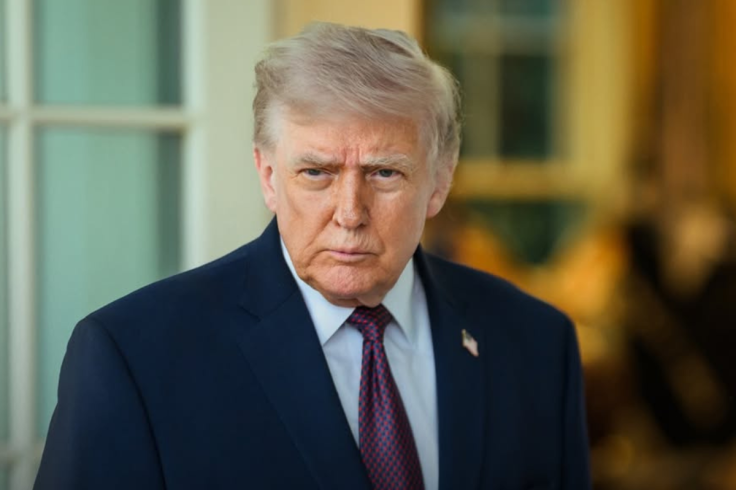
Hair-Loss Drug Silence Deepens Questions Around Donald Trump
Medical specialists are not reassured. Robert Klitzman, a psychiatrist at Columbia University, told reporters that the decision not to address the hair-loss treatment directly had set off loud alarm bells. In his words, 'It raises significant questions of what else is possibly not being revealed.' Coming from a senior academic with no obvious partisan stake, that scepticism is hard to dismiss as routine political sniping.
Klitzman highlighted the drug's recognised association with low mood and anxiety. Depression, he argued, could realistically affect Trump's capacity to handle the relentless pressure and judgement calls demanded by the presidency. These are not abstract worries. The same medication has been the subject of repeated clinical debates about so-called post-drug syndromes, with some patients reporting lingering sexual and psychological fallout even after stopping the pills. Nothing in the White House line directly answers whether Trump continues to take it, quietly stopped, or switched to something else.
It can be recalled that this is far from the first time Trump has been accused of sugar-coating or selectively editing his medical story. In 2020, when he contracted Covid-19, the then-president publicly projected strength and claimed he was doing 'very well,' even as officials later admitted he had endured 'dangerously low' oxygen levels and required a three-day stay at the Walter Reed National Military Medical Centre. That gap between cheerful rhetoric and clinical reality still colours how many people now read any health statement signed off by his team.

A Pattern Of Partial Answers On Donald Trump's Health
During his current second stint in office, Trump has already made three public trips to Walter Reed, each setting off another round of amateur diagnosis. Observers have pointed to swollen ankles, unexplained dark bruising on his hands and episodes of what critics call increasingly erratic public behaviour. None of those observations, on their own, amounts to proof of serious illness, but the absence of clear, data-rich updates from the White House leaves plenty of room for speculation.
Last October, Trump told journalists he had undergone an MRI scan, then refused to say which part of his body doctors were examining. He volunteered only that 'it wasn't the brain because I took a cognitive test and I aced it.' Medical staff waited until December to clarify that the scan had been of his heart and abdomen and that both were reportedly 'completely clear.' The delay in providing that relatively benign explanation did little to dispel the impression of a president and a medical team who default to secrecy first and candour later, if at all.
The hair-loss drug Trump has taken for years is absent from his latest medical report.
— FactPost (@factpostnews) June 4, 2026
White House officials stated they are not obligated to disclose all of Trump’s medications. pic.twitter.com/oXmMeSFsDK
The new three-page memo follows the same pattern. It confidently asserts that the president is in 'excellent health,' yet independent clinicians have noted how little hard data underpin that verdict. Key metrics such as detailed cardiac readings, mental health screening results, or a full list of regular medications are largely absent. Earlier concerns about a rash on Trump's neck, flagged by doctors this year, have simply vanished from the narrative.
The statement does concede that Trump has visible bruising on his hands, attributing this to aspirin use for his heart. However, officials declined to specify the dosage or frequency, information that would normally be uncontroversial in a transparent health summary. When that reticence is combined with the unexplained omission of the hair-loss drug and its well-documented risks of depression and sexual side effects, it leaves a jagged outline of a medical picture that feels curated rather than fully disclosed.
There is no independent confirmation that the President is still taking the hair-loss medication in question. Without fuller records, much of the debate sits in the uncomfortable space between what is known and what is merely suspected, a space that grows wider every time another question is met with a carefully worded non-answer.
© Copyright IBTimes 2026. All rights reserved.